By the Our Home to Yours Workshop Team | Published: 8 September 2026
The quick answer: A boot room needs three things to work well — sturdy hooks at coat height, a bench with shoe storage underneath, and open shelving for bags, wellies and everyday gear. Get those three layers right and most hallway clutter has somewhere to go.
There is a moment in most family homes when the hallway stops being a hallway and starts being a pile. Coats on the newel post, shoes by the door, school bags on the floor, muddy boots waiting by the mat. It is not a storage problem exactly — it is a system problem. And a boot room, even a small one, is the system that fixes it.
This guide covers the practical storage ideas that actually work: the right hooks, the bench you will use every day, the shelving that stops things piling on the floor. We will also look at how to pull it together in a tight hallway, and what to look for when you are choosing pieces that will last.
What is a boot room?
A boot room is a dedicated transition zone between the outdoors and the rest of your home. Its job is to catch coats, shoes, bags and muddy gear before they make it further inside. In older farmhouses and country homes, it was a separate room off the back door. In most modern houses, it is a section of the hallway — or even just one well-planned wall.
The concept is similar to the Japanese genkan: a specific spot where outdoor things stay, so the rest of the house stays calm. You do not need a dedicated room to make it work. You need the right storage in the right place.
The three things every boot room needs
Most boot room design advice — from Homebuilding & Renovating to bespoke kitchen designers — agrees on the same three-layer system:
- Low-level shoe storage — a rack, cubby or bench with space underneath for footwear
- Mid-level hooks — at coat height for adults, lower down for children
- Upper storage — shelving for bags, hats, helmets and seasonal items
Get all three and there is somewhere for everything. Miss one and the system breaks down — bags end up on the floor, coats on the bench, shoes on the stairs.
Hooks: the non-negotiable starting point
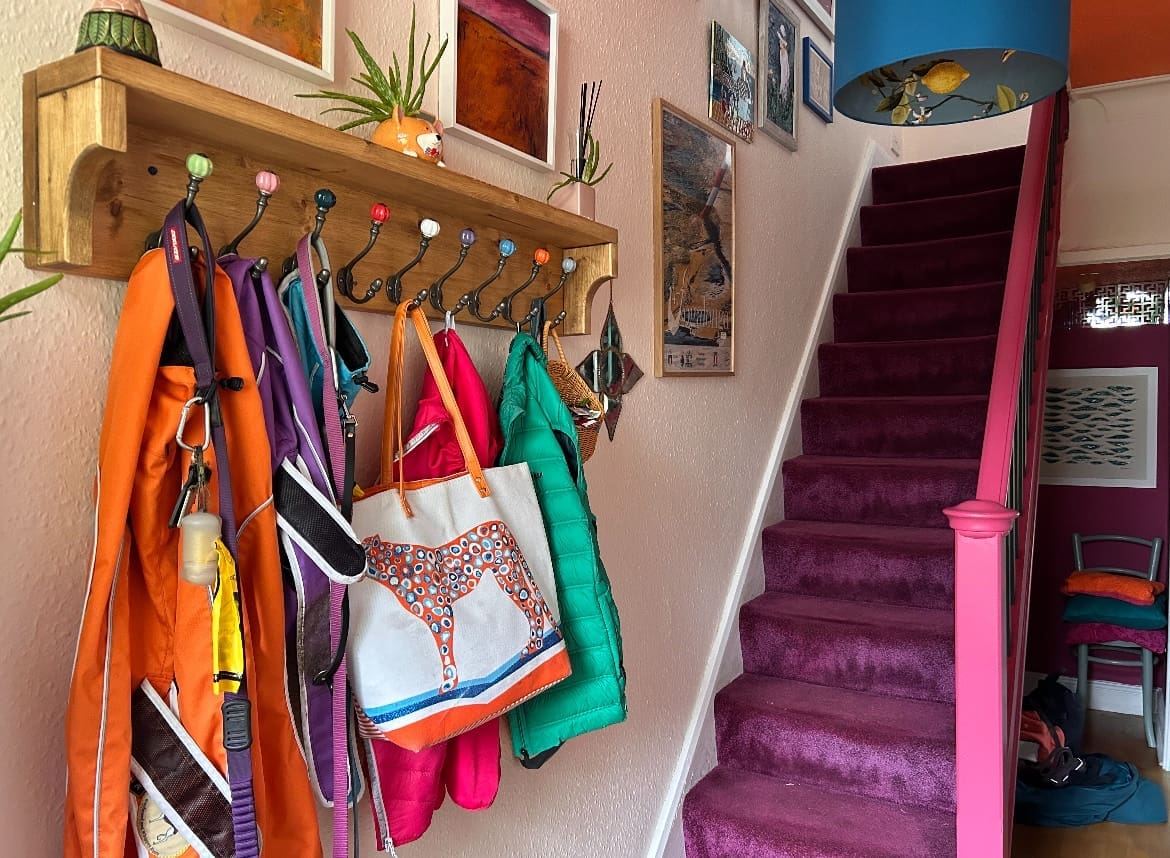
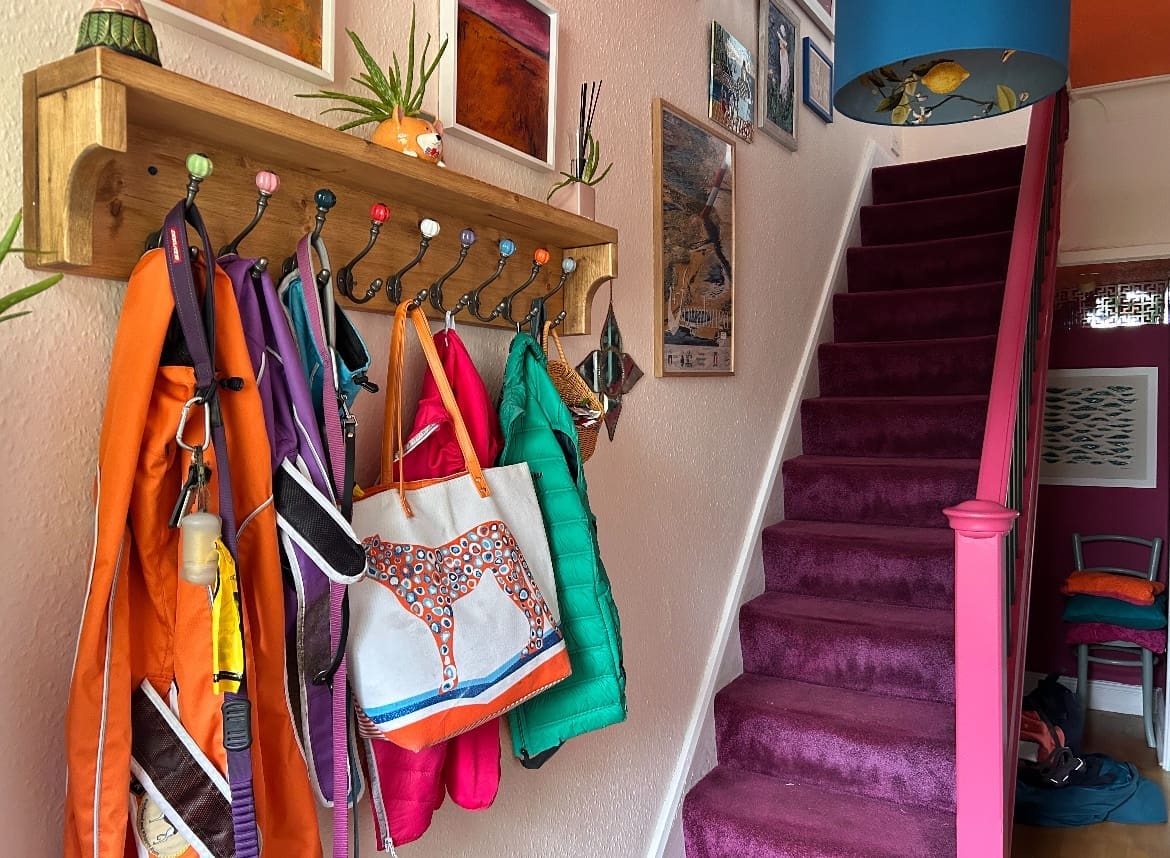
In any boot room, hooks are the first thing to fix. They handle the items people reach for most often — coats, jackets, dog leads, reusable bags — and they keep them off the floor and the bench where they would otherwise land.
For a family household, plan for at least two hooks per person. Adults need hooks at around 150–165cm from the floor; children’s hooks should sit lower, at around 100–120cm, so children can hang and retrieve their own things without help. A double row — one high, one low on the same board — handles both without needing twice the wall space.
Cast iron hooks on a wooden board are a practical choice: they are strong enough for heavy coats and bags, and the wood backing means you are fixing into one piece rather than drilling individual fixings for every hook. Our rustic coat rack with cast iron hooks and shelf combines a row of hooks with a small upper shelf for keys and post — a good example of how one piece can do more than one job.
If you are working with a narrow wall or a corner space, a coat hooks with shelf combination gives you hook storage and a top surface without needing a full-width unit.
A bench with storage underneath
A boot room bench does two things. It gives you somewhere to sit while you are putting on or taking off shoes — which matters more than people expect — and it creates a home for shoes and boots underneath, lifting them off the floor.
The most useful bench height for sitting and shoe removal is around 45–50cm from the floor. If you are combining the bench with open cubbies or a slatted shoe rack underneath, keep the gap high enough for wellies — most standard wellies need around 40cm clearance. A boot bench that is too short for wellies is a bench that ends up with wellies next to it rather than inside it.
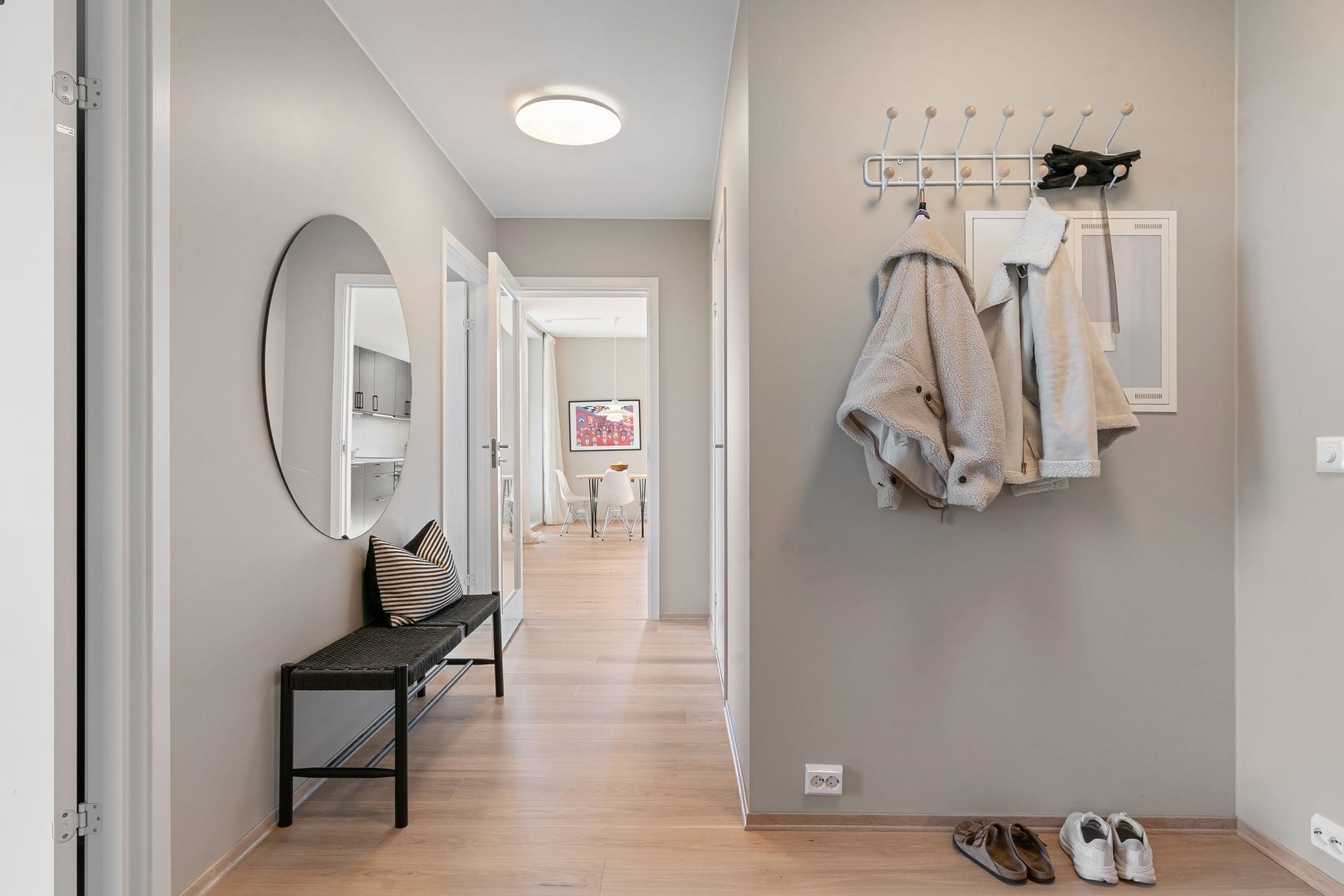
For a small hallway, a bench that runs along one wall — even a short one at 90–100cm wide — combined with hooks above it gives you everything a proper boot room has, just in a more compact footprint. The bench acts as a visual anchor, and everything else can build around it.
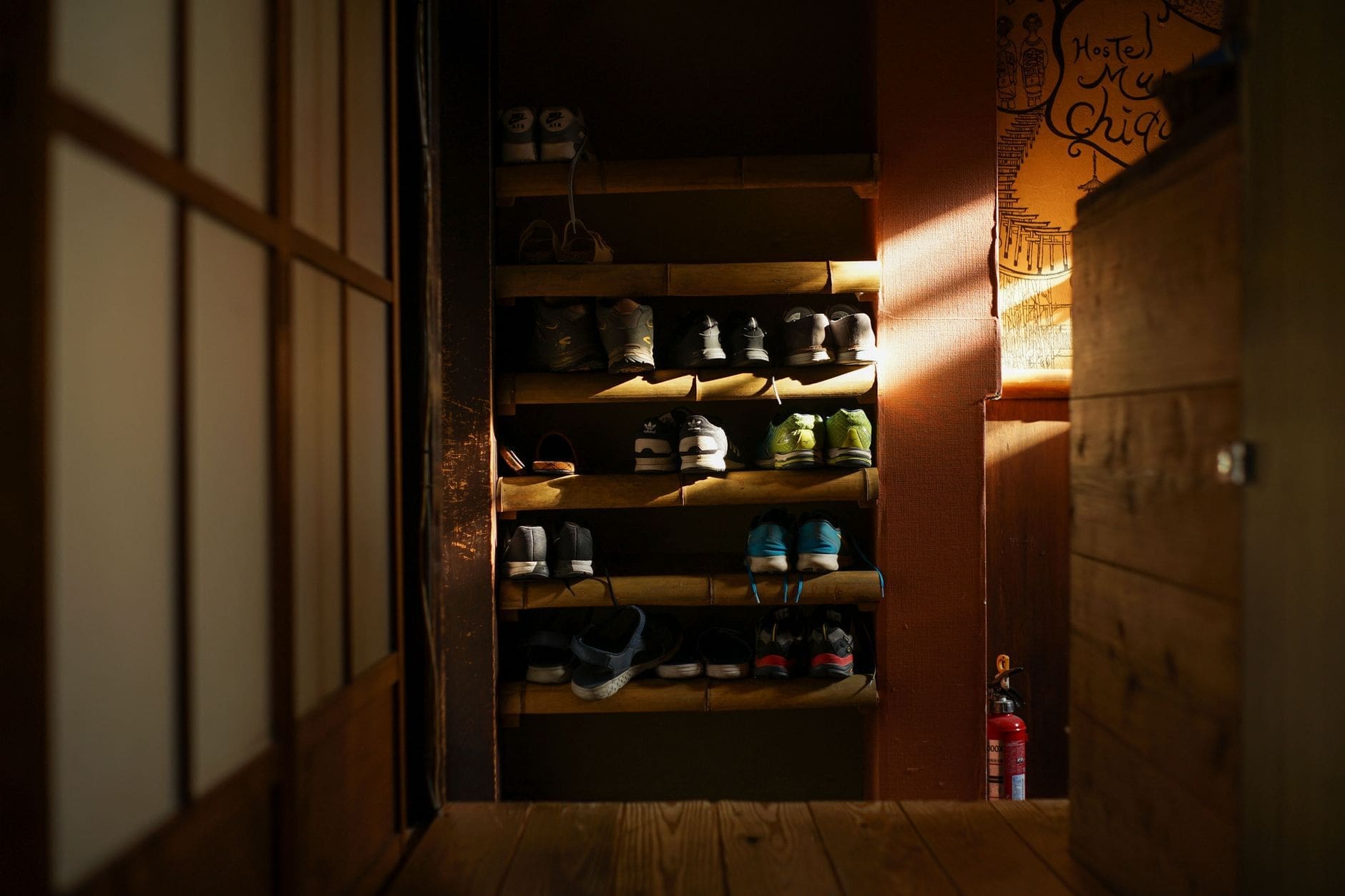
Shelving and open storage
Once hooks and a bench are in place, shelving above adds the third layer of capacity without adding floor footprint. Upper shelves handle: hats and helmets, seasonal items, sports kit bags, and the kind of lightweight gear that does not have anywhere else to live.
Open shelving works better than closed cupboards in a boot room for one reason: speed. You want people — especially children — to be able to grab what they need and go without opening doors. Open cubbies above the bench, or a simple slatted shelf running the width of the wall, both hit this well.
Closed storage has its uses for formal coats or things you want out of sight, but as the primary storage system in a working boot room, open tends to win.
Planning a boot room in a small hallway
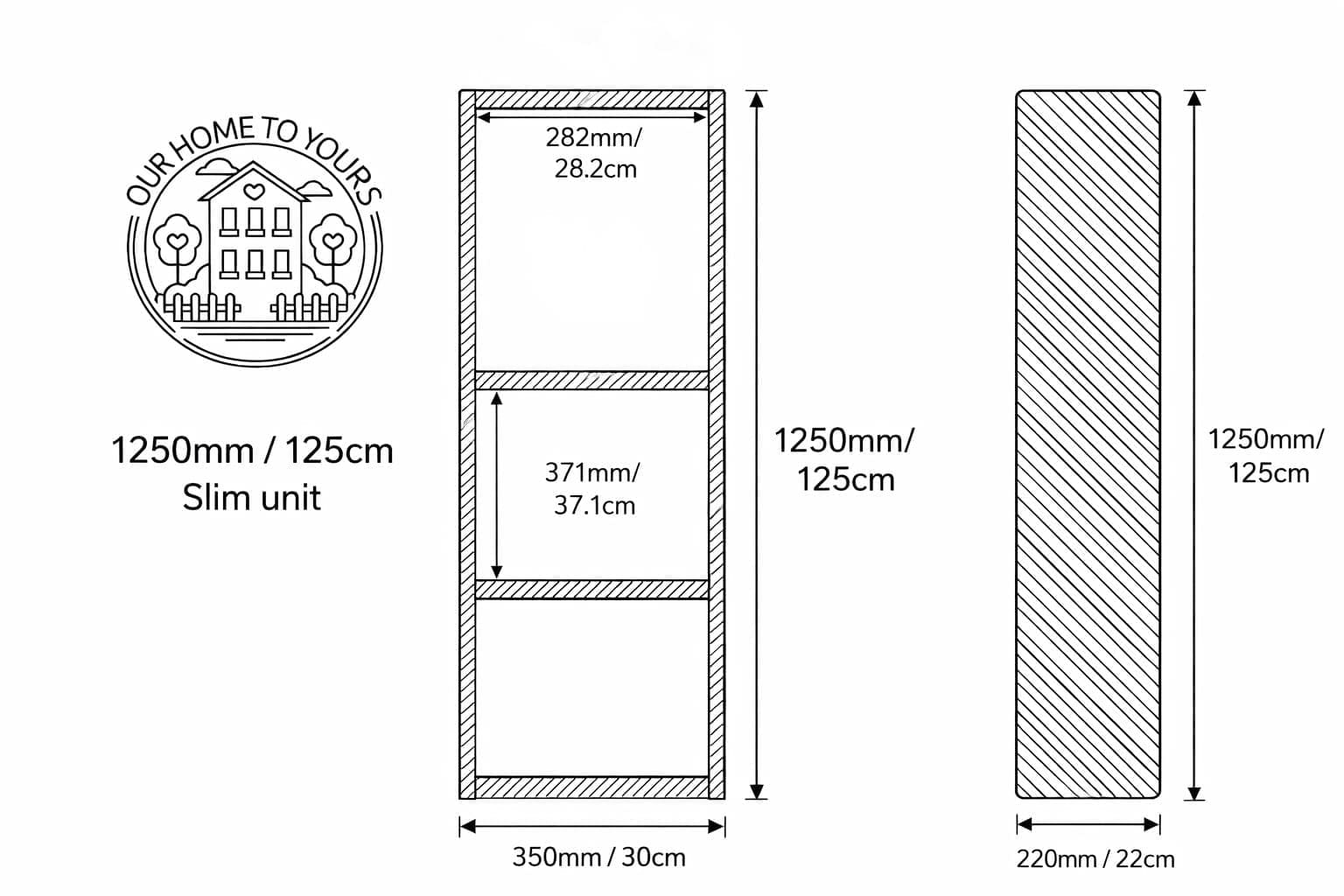
You do not need a large space to make a boot room work — you need one well-organised wall. Even a run of 120cm is enough to fit a bench, hooks above and a shelf. Some practical options for tight hallways:
- Single-wall boot room: bench along one wall, double row of hooks above it, narrow shelf at the top. Everything the family needs, all in one run.
- Corner boot room: hooks on the return wall, bench on the main wall with shoe storage below. Uses an awkward corner productively.
- Minimal wall setup: if the hallway is genuinely narrow, wall-mounted hooks plus a slim shoe rack tucked beside the door serves the same function without a bench. Less storage, but much better than nothing.
The biggest mistake in small boot room planning is trying to store everything. A working boot room should only hold the things used daily or weekly. Seasonal items, outgrown coats and rarely-used gear belong elsewhere — keeping the boot room lean is what makes it work.
For more ideas on making an entry hallway pull double duty, our guide to hallway storage for shoes, coats and clutter has a broader look at the options.
What to look for in handmade wooden boot room pieces
Hallway storage takes more daily contact than almost anything else in the house — hooks are yanked, benches are sat on heavily, shelves take awkward bag handles. The materials matter.
Solid wood — oak, pine or reclaimed timber — handles this kind of daily use well. It is repairable if it gets knocked or scratched, which MDF-backed flatpack is not. Joinery matters too: mortice-and-tenon frames and properly countersunk fixings will still be holding up in twenty years. Coat hook plates screwed directly to a wooden rail are more secure than individual hooks drilled into drywall, which tend to pull free under the weight of heavy winter coats.
At Our Home to Yours, all our hallway pieces are handmade in our Derbyshire workshop from solid wood — nothing hollow, nothing laminated. If you would like to talk through what would work for your space, get in touch about a custom piece.
Frequently asked questions
What is the difference between a boot room and a mudroom?
Nothing significant — they are the same idea with different names. “Boot room” is the British term, typically associated with country homes and rural households. “Mudroom” is the American equivalent. Both refer to a practical storage space at the entry point of a home for outdoor gear.
How do you create a boot room in a small hallway?
Focus on one well-organised wall. A bench (even 90cm wide) combined with hooks above and a shelf at the top gives you the three storage layers a boot room needs. Use vertical space rather than floor space, and keep the area for daily-use items only — seasonal storage belongs elsewhere.
What should go in a boot room?
Only the things used regularly: everyday coats and jackets, current-season footwear, school bags, dog leads, reusable bags, keys and post. A boot room filled with rarely-used items quickly becomes unusable — keep it lean and it keeps working.
What hooks are best for a boot room?
Strong, fixed hooks on a wooden mounting board are the most reliable choice. Cast iron hooks on a timber rail handle heavy winter coats and bags without pulling away from the wall. Avoid small adhesive hooks or light-duty single fixings for this kind of daily use — they are not built for it.
For a practical way to add hanging storage to a boot room wall, a shaker peg rail is one of the most versatile options — it holds outerwear, bags, leads, and small accessories on a single run of wall.