Our Home to Yours — Derbyshire
How to Choose a Ready-Made Home Bar Unit
A ready-made home bar unit is a different purchase to a shelf or a storage rack. It’s a piece of furniture that takes up space, makes a statement, and changes how a room is used. Get it right and it becomes a genuine part of your home. This guide covers what to think about before you buy — from size and style to materials and placement.
What Is a Ready-Made Home Bar Unit?
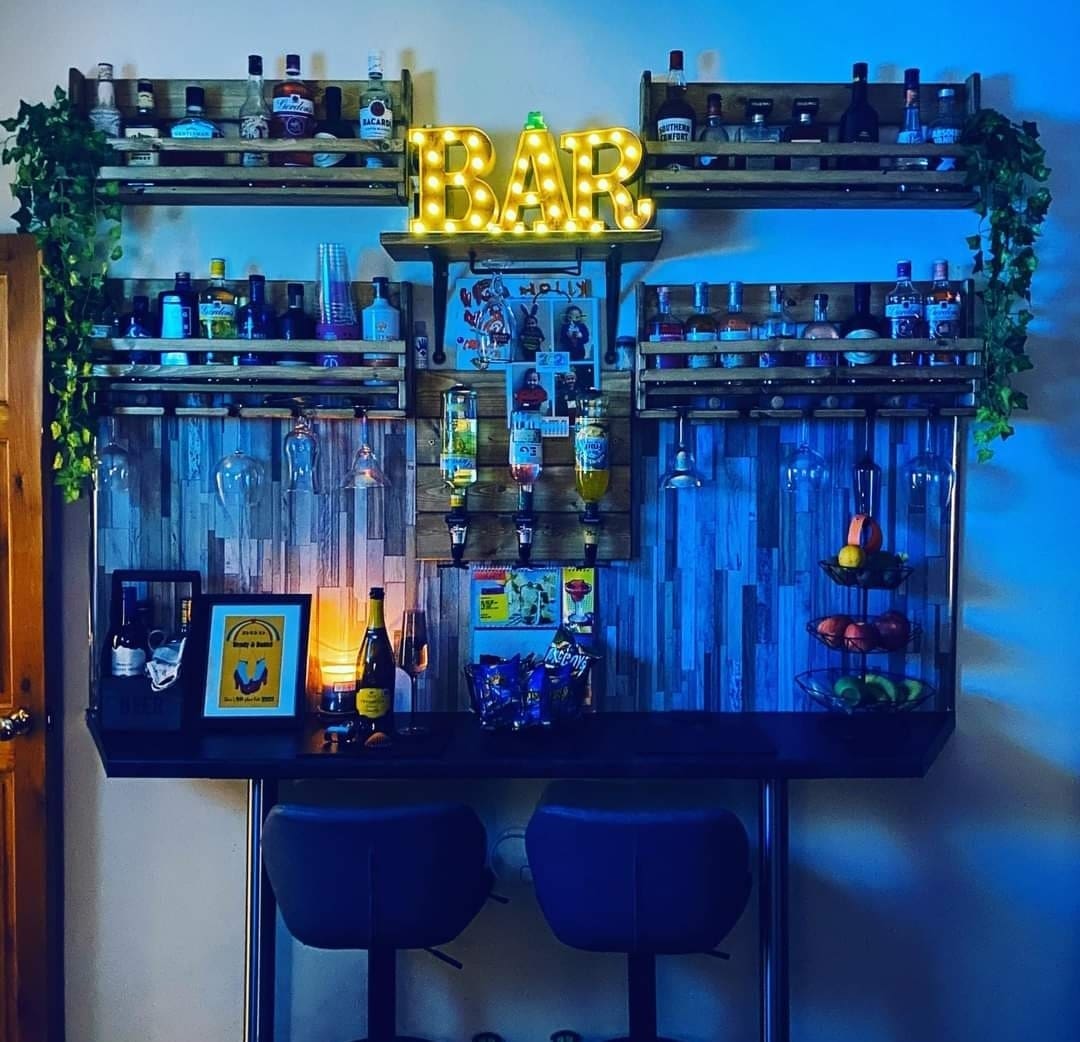
A ready-made home bar unit is a piece of furniture designed to hold spirits, glasses, and bar accessories in one place. Unlike a few shelves arranged to look like a bar, a proper bar unit is built with this purpose in mind. It typically combines open bottle display space, a surface for mixing, and storage for glasses — all in a coherent structure that looks intentional rather than improvised.
Ready-made home bars come in a range of formats. Some are compact wall-mounted structures. Others are larger freestanding units. Some combine a back bar display with a counter or ledge at standing height. The common thread is that they’re made to create a dedicated drinks space in your home without the cost or commitment of a built-in.
For many people, the appeal of a ready-made bar unit is that it comes as a complete piece rather than requiring assembly from parts. You buy it, you put it in place, and the room immediately has a bar.
Do You Actually Need a Bar Unit, or Would a Shelf Do?
It’s a fair question. Wall-mounted gin shelves, bottle display shelves, and open drink storage shelves can all create the look and function of a home bar without the footprint of a full unit. Before committing to a larger piece, it’s worth thinking about what you actually need.
| Option | Best for | Typical footprint |
|---|---|---|
| Wall-mounted gin shelf or bottle rack | Compact collections, small rooms, wall space available | Minimal — wall only |
| Bottle display shelf (floor or wall) | Larger collections, display-focused approach | Small to medium |
| Ready-made home bar unit | Dedicated drinks space, entertaining focus, making a feature of the bar | Medium to large — requires floor space and wall space |
If you’re mainly looking for somewhere to store bottles and glasses, a well-chosen shelf might be all you need. If you want a proper bar area — somewhere you stand to mix drinks, somewhere guests gather, somewhere the room says “this is the bar” — a full unit earns its place.
Sizing a Home Bar Unit
Getting the size right is the most practical challenge when choosing a home bar unit. Measure before you start looking, rather than after you’ve fallen for something.
Wall Space and Height
Most home bar units are designed to sit against a wall. The width of that wall and any obstructions (light switches, sockets, windows) will determine what you can fit. For wall-mounted designs, a clear run of at least 90–120cm gives you a reasonable-sized display.
Height matters too. A unit that extends to ceiling height will dominate the room in a way that a mid-height piece won’t. Think about whether you want the bar to be a strong focal point or something that fits into the room more quietly.
The Counter Height
If your bar unit includes a counter or serving surface, aim for a standing height of around 90–95cm. This is the standard for bar tops and allows you to mix drinks comfortably without bending or reaching up awkwardly. Some units are designed more for display than for mixing, in which case the counter height matters less.
Depth
Bar units with shelving and display space can project quite a way from the wall. Allow for at least 25–30cm of clearance, and consider whether the unit will obstruct a doorway, circulation route, or other furniture when open or in use.
Practical tip: Before choosing a location, stand in the spot where the bar will go and think about how you’ll use it. Is there room to stand in front of it? Can guests gather nearby? Can you reach upper shelves comfortably? These questions are easier to answer before the piece is installed than after.
Materials: What Makes a Good Home Bar Unit
A home bar unit made from solid or reclaimed wood has a different quality to one made from MDF with a printed finish. Both can look similar in photographs, but in person — and over time — the difference becomes clear.
Solid Timber
Solid wood is durable, ages well, and has a presence that other materials don’t match. A bar unit made from solid pine or oak is heavy, structurally sound, and will hold shelves of bottles without bowing or flexing. The natural grain and warmth of solid timber also suits a bar environment particularly well — there’s something fitting about a drinks display on honest, natural wood.
Reclaimed Timber
A bar unit made from reclaimed wood brings additional character. The grain is richer, the colour variation is greater, and the natural marks in the wood — previous lives in other structures — give the piece a story. A reclaimed wood bar unit doesn’t look like something from a catalogue, and that’s part of the point.
What to Avoid
For a bar unit that’s going to hold significant weight (a well-stocked bar can be heavy), avoid furniture-board cores with wood-effect finishes. These can bow under the weight of bottles over time and don’t carry the same feel as solid construction. A home bar is a piece you’ll be using and looking at a lot — it’s worth the investment in something built properly.
Style: What Works in a Living Room or Dining Space
A home bar unit sits in a social space, usually the living room or a dedicated room if you have the luxury. The style of the piece should sit comfortably alongside the furniture and décor you already have.
Rustic and Reclaimed
A home bar made from reclaimed or rough-sawn timber with natural finishes suits homes with a warm, textural aesthetic. It works particularly well against exposed brick, stone floors, dark wall colours, or alongside other natural materials. The character in the wood adds to the atmosphere of the space.
Clean and Natural
Smooth solid pine or oak with a wax or light oil finish suits a more contemporary look without losing the warmth of real wood. This style works well in neutral-toned rooms where you want the materials to be present but not dominating.
Making a Feature
Some home bar units are designed to be the focal point of the room — a wall-mounted display that draws the eye when you enter. These work best on a clear wall where there’s nothing competing for attention. Good lighting helps here: a well-lit bar display (from below the shelves or above) turns a good unit into a great one.
What to Keep in the Bar Unit
A home bar unit works best when it’s well-organised rather than just a collection of bottles on shelves. Thinking about what you’ll keep in it helps you choose the right configuration.
- Spirits and bottles: Standard spirit bottles are roughly 30cm tall. Allow shelf height of at least 35cm to display them upright without cramping the look.
- Glasses: Wine glasses, tumblers, and highballs all have different heights. If you want to hang glasses, look for a unit with a rail or hanging rack built in. If they’ll stand upright, allow enough shelf depth to store them safely.
- Bar tools and accessories: Cocktail shakers, bar spoons, measuring jiggers, bottle openers — these are easiest to keep in a dedicated drawer or small tray rather than scattered across a shelf.
- Tonics and mixers: Canned and small-bottled mixers can be stored upright or on their sides. If you keep a lot of these, make sure there’s practical lower storage or surface space for them.
Display tip: A well-curated bar display doesn’t need to hold every bottle you own. Keep your favourite or most-used bottles on display and store the rest elsewhere. Three or four interesting bottles arranged well looks more considered than twenty bottles crammed onto shelves.
Placement in the Room
Where you put a home bar unit matters almost as much as the unit itself.
The Corner Option
A corner is often an underused part of a room, and a home bar unit here can feel natural — it’s out of the main traffic flow but visible from most of the room. Some units are designed specifically for corner placement with angled shelving or a corner-wrapping structure.
Against a Feature Wall
A bar unit centred on a chimney breast or feature wall becomes the focal point of the room. This works well in rooms where the fireplace is no longer in use — it reactivates a space that might otherwise feel empty.
Alcoves
If you have alcoves on either side of a chimney breast, a smaller bar unit or back bar display fits naturally into this space. It uses the depth and form of the alcove to its advantage.
A Dedicated Room
If you’re lucky enough to have a spare room you can dedicate to a home bar, the sizing and placement considerations become more generous. A larger unit with a full back bar display, counter height surface, and proper glass storage works particularly well in a room where it can be the dominant piece of furniture.
Maintaining a Wooden Home Bar Unit
A solid wood bar unit requires very little maintenance. For general care:
- Wipe spills promptly — spirits can damage wood finishes if left to sit
- Use coasters or a bar mat on any counter surface to protect the wood from glasses and bottles
- Apply furniture wax or oil once or twice a year to keep the finish in good condition
- Avoid placing the unit in direct sunlight, which can fade the timber over time
Reclaimed wood and solid timber units are built to last, and with basic care they’ll look better over time rather than worse.
Browse ready-made home bars
Our Home to Yours makes handmade wooden home bar pieces and drink display furniture in Derbyshire. Built from solid and reclaimed timber to last.
Frequently Asked Questions
How much space do I need for a home bar unit?
A compact wall-mounted back bar display can fit into a space as small as 80–90cm wide. Full units with counters and integrated shelving typically need 100–180cm of wall space and a clear floor area of around 50–60cm in front. Measure your available wall space and floor clearance before choosing a size.
Can a home bar unit work in a rented property?
Freestanding home bar units are the best option for rented properties, as they don’t require wall fixings. For wall-mounted displays, always check the terms of your tenancy before installing fixings — many landlords are fine with small shelving fixings but it’s better to ask first.
What’s the difference between a home bar unit and just using drink storage shelves?
A home bar unit typically combines a back bar display, counter or serving surface, and often glass storage in one integrated piece. Drink storage shelves are more modular and flexible, but don’t necessarily create the same dedicated bar atmosphere. Both are valid — it depends on whether you want a furniture piece or a storage solution.
Is solid wood a good choice for a home bar unit if you’re going to use it a lot?
Yes — solid wood is one of the most durable materials for furniture that gets regular use. It holds weight well, doesn’t degrade the way furniture board does under sustained load, and can be easily refreshed with a coat of wax if the surface gets marked. A well-made solid wood bar unit should last many years of regular use.
Can I get a home bar unit in a custom size?
Many small makers who produce handmade wooden furniture can work to custom dimensions. If you have a specific alcove or wall space in mind, it’s always worth asking. A piece built to fit your space exactly will work better than adapting a standard size to suit an awkward spot.