Our Home to Yours — Ripley, Derbyshire
How to Choose a Wooden Shelving Unit for Your Home
A wooden shelving unit is one of the most versatile pieces of furniture you can buy. It sounds simple — a few shelves, a couple of uprights — but the choices involved make a real difference to whether it works well in your home or just takes up space.
Size, depth, shelf height, timber, and the room it goes in all matter. Buy something too narrow and it looks lost. Too deep and it dominates a small room. Too lightweight and it wobbles under the kind of load shelves actually carry. This guide works through the main considerations so you can make the right call for your space.
Why Wooden Shelving Units Work in Almost Every Room
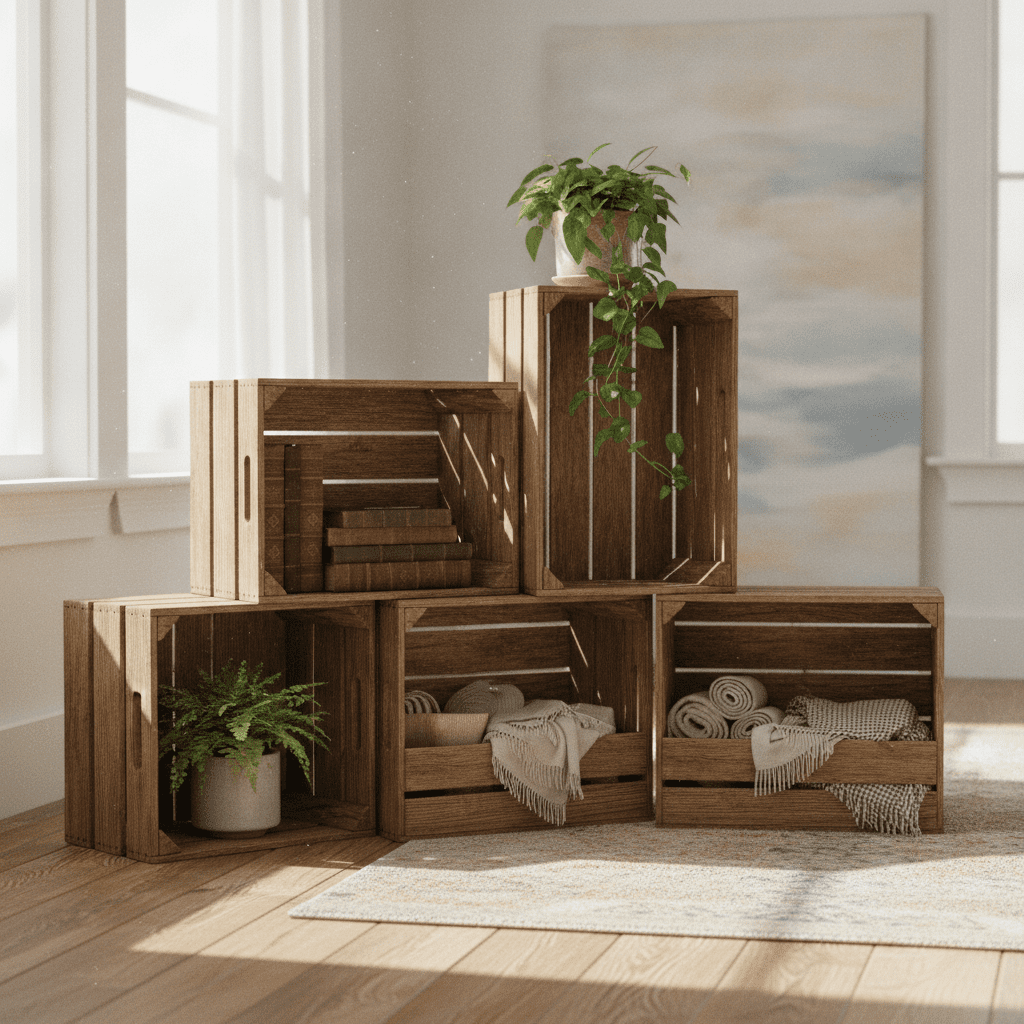
There are good reasons why wooden shelving units have remained a standard piece of home furniture for so long. Wood is solid, warm, and reasonably neutral — it works with painted walls, with natural tones, with darker interiors, and with rooms that are full of other things.
A well-made wooden shelving unit has weight and presence that cheaper alternatives struggle to match. When you load it with books, plants, bottles, or storage boxes, it stays still. That matters more than it sounds — a shelving unit that shifts or flexes under load does not inspire confidence, and the contents end up looking uneven.
There is also an aesthetic quality to solid wood that engineered board products cannot replicate. The grain, the way it ages, the slight variations in tone across each shelf — these give a handmade or solid wood piece a character that flat-pack furniture does not have. If you are choosing something that will be visible in a room you use every day, that character is worth having.
Start With the Space, Not the Unit
The most common mistake when buying a shelving unit is choosing the piece first and fitting it into the space second. It works better the other way around.
Before looking at any shelving unit in detail, measure the wall space available and think about what will go on either side of it. Measure the floor-to-ceiling height too, particularly if you are considering a taller unit. In older houses, ceiling heights vary room to room — and even in modern homes, things like a door architrave, a skirting board, or a radiator pipe can limit where a unit will actually fit.
Write down: maximum width available, maximum height, and the depth you have to play with. Depth is easy to overlook. A unit that is too deep for its position will protrude into the room awkwardly, particularly in narrower spaces like hallways, landing areas, or alcoves.
For alcoves in particular: Take measurements at three points — left side, middle, and right side of the alcove. Alcoves in older homes are often fractionally out of square, and a unit built to fit tightly will not sit correctly unless the measurements account for this.
Shelf Height: One Detail That Changes Everything
The distance between shelves determines what the unit can actually hold. This is worth thinking through before you choose a design, because changing the shelf spacing after the fact is either impossible or requires work.
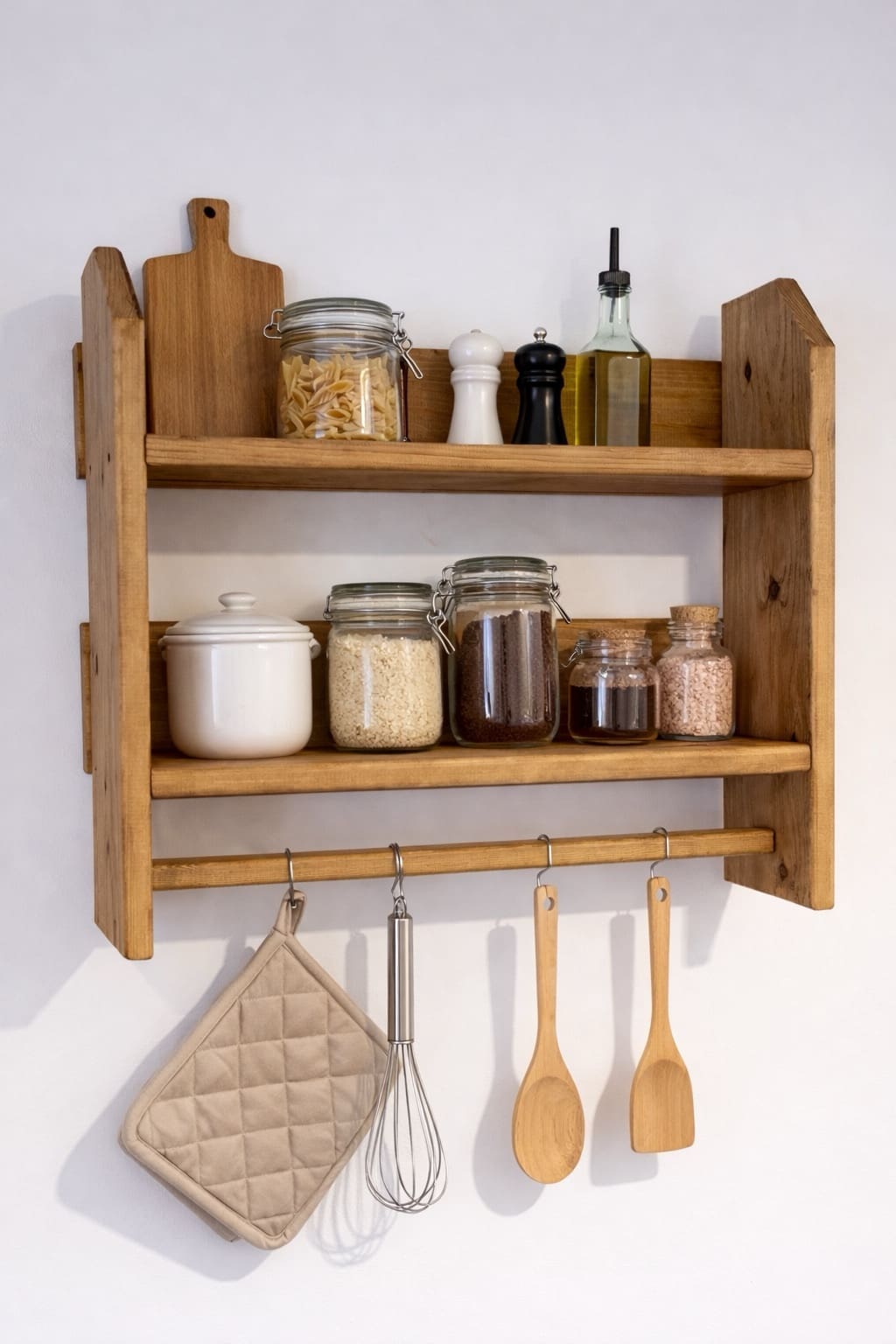
Consider what you are most likely to store on the unit. Books? Most paperbacks need around 200mm of clear height; hardbacks typically need 280mm or more. Decorative items, plants, or ornaments are more variable. Kitchen or pantry items — bottles, jars, tins — often need 300mm or more of clearance to be reached comfortably.
Adjustable shelves are a practical advantage if you are not sure what will go on the unit long-term, or if you expect the contents to change. Fixed shelves are generally stronger and visually cleaner, but commit you to specific heights from the outset.
For a general-purpose shelving unit in a living room, home office, or study, a mix of heights — two or three taller bays and two or three shorter ones — gives the most flexibility. For a specific purpose such as storing a particular type of item, uniform shelf spacing is usually better.
How Tall Should a Shelving Unit Be?
This depends on the room and how much you want to store — but it is also worth considering how the unit will look in the space.
Tall freestanding units (above 150cm)
Tall shelving units make the most of wall height and provide significant storage capacity. They work well in rooms with reasonable ceiling heights — roughly 230cm or more — and in spaces where a visual anchor is wanted. A tall wooden unit on a chimney breast wall or in an alcove draws the eye and gives a room structure.
In smaller rooms, very tall units can feel oppressive. The ceiling height matters here. If the unit reaches close to the ceiling, the room can start to feel enclosed. A gap of 30–40cm between the top of the unit and the ceiling is a reasonable minimum for the room to feel comfortable.
Mid-height units (around 100–150cm)
Mid-height units work well in rooms where you want display storage at a comfortable height without occupying the full wall. They work particularly well below windows, beside a sofa, or in rooms where you want the wall above the unit to remain clear — for artwork, mirrors, or simply open space.
Low bookcase-style units (under 100cm)
A low shelving unit works as a room divider, a piece of display furniture, or an addition below a window where a taller unit would block the light. These are often the most versatile in smaller rooms.
Depth: Often Overlooked, Always Important
Depth — the distance from the front to the back of each shelf — determines what fits on the unit and how much space it takes up in the room.
A typical general-purpose shelving unit runs between 250mm and 350mm deep. This suits most books, standard box files, ornaments, and many storage items. Shallower units — around 200mm — are enough for small items but will not hold standard-depth books or larger objects. Deeper units — 400mm or more — work well for kitchen storage, utility use, or when you need to store larger or more irregular items, but take up noticeably more floor space.
In a room where floor space is limited, a shallower unit is usually the right trade-off. A unit that is 200mm deep holds less volume but leaves the room feeling more spacious than a 350mm-deep piece in the same spot.
Room-by-Room Considerations
Living room
In a living room, a wooden shelving unit often does double duty — storage and display. Think about what proportion of the shelves will hold books and what will hold decorative items, plants, or objects. Mixing shelf heights works well here: a couple of deeper bays for larger items, and shallower bays for smaller decorative pieces.
Consider whether you want the unit to sit flush against the wall or whether a small amount of clearance feels better. A unit on low feet or with a slightly raised base sits more lightly in the room than one that starts flush with the floor.
Home office or study
In a working space, function tends to take priority. Adjustable shelves, a depth that accommodates box files and lever arch files (typically 250–280mm), and a height that suits the available wall space. A taller unit is usually an advantage in a home office — it keeps work materials accessible without cluttering the floor.
Hallway
Hallways are often narrow, so depth matters more than anywhere else. A shallower unit — 200–250mm — is usually the right call. Height is less of a constraint here, though very tall units in a narrow hallway can feel slightly claustrophobic. A mid-height unit used for bags, shoes, or everyday essentials tends to work better than a full-height unit in this space.
Bedroom
In a bedroom, a wooden shelving unit can work as clothing storage, book storage, a display piece, or a combination of all three. The aesthetic matters here more than in a utility space — a piece in a matching or complementary finish to the other furniture in the room will settle into the space better than a contrasting piece.
On styling: A shelving unit does not have to be packed full to look good. A mix of items — some books, some objects, some clear space — usually looks better than a unit filled from shelf edge to shelf edge. Think of a third of the available space as visual breathing room.
Timber Finish: Light, Dark, or Natural?
The finish of a wooden shelving unit affects how it reads in the room and how much maintenance it needs over time.
Lighter timber — natural pine, limed or whitewashed finishes — tends to feel airy and works well in smaller rooms or rooms with natural light. It can feel a little cold in the wrong context, but paired with warm accessories it sits very comfortably.
Darker finishes — oiled oak, ebonised pine, reclaimed timber with a dark patina — feel more substantial and suited to larger rooms or rooms with rich colours. They tend to look more expensive and age very well, but can make smaller or darker rooms feel heavier.
Natural, untreated or lightly oiled wood is the most versatile. It reads as warm without being heavily coloured, ages gracefully, and complements both lighter and darker rooms depending on the setting. This is often the best starting point if you are unsure.
New vs Handmade: What the Difference Looks Like
There is a visible difference between a mass-produced shelving unit and a handmade piece, and it shows most clearly when the unit is loaded and used.
Mass-produced units are built to a standard specification with uniform material and precise tolerances. They look clean and consistent, but they also tend to look the same as every other unit of the same design. In a room designed to feel personal and individual, that uniformity can work against the space.
Handmade or small-batch wooden units use solid timber rather than engineered board, and the grain and character of the wood come through in the finished piece. Two units from the same workshop, built to the same design, will look slightly different — because the wood itself is different. That variation is part of what makes them feel right in a home.
There is also the custom dimension. If the space you have is not a standard size, a piece made to your measurements will always fit and look better than something adapted to fit. Getting in touch before you buy is often the most useful step — it is the quickest way to understand what is possible within your space and budget.
A Practical Checklist Before You Choose
- What are the maximum width, height, and depth I have available?
- What will primarily be stored on the shelves — books, objects, kitchen items, clothing?
- Do I need adjustable shelves, or can I work with fixed heights?
- How tall do I need the unit to be to store what I have?
- What timber finish suits the room and the other furniture in it?
- Do I need a standard size, or would a custom piece fit better?
Buying a wooden shelving unit is one of those home purchases where a small amount of preparation makes a meaningful difference. The wrong size or depth will feel off every time you look at it. The right one will feel as though it was always there — which, if it is solid and well-made, it practically will be.
Explore handmade wooden shelving
We make solid wooden shelving units in our Derbyshire workshop. If you have a specific size, timber, or finish in mind, we are happy to talk through what is possible.