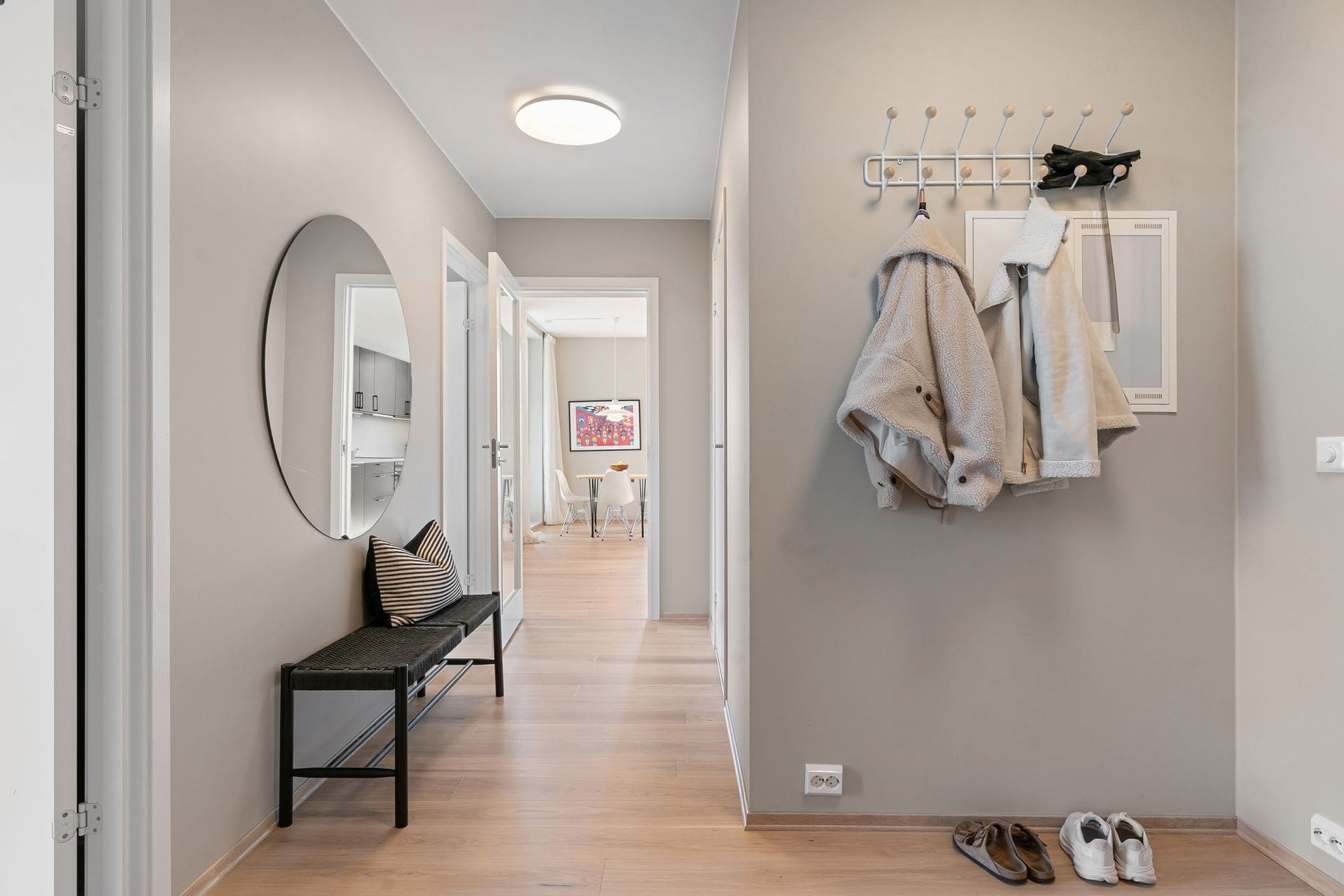
A solid wooden coat rack typically weighs 2–4kg before a single coat is added. Hang it correctly and it will carry a full household’s worth of coats for years without moving. Hang it wrong and you risk the rack pulling away from the wall — or worse, coming down suddenly under a heavy load.
This guide covers everything you need to hang a wooden coat rack safely and securely on any wall type common in UK homes.
What You Will Need
- A pencil and tape measure
- A spirit level
- A power drill with masonry and wood bits
- A stud finder (for plasterboard walls)
- Wall plugs suited to your wall type
- Screws — typically 50–60mm for solid walls
- A screwdriver or drill driver bit
Step 1: Identify Your Wall Type
Knock firmly on the wall with your knuckle. A solid thud means brick or block — the most common internal wall in older UK homes. A hollow sound between knocks means a plasterboard stud wall, typical in newer builds and extensions. A stud finder will confirm it in seconds if you are unsure.
Getting this right matters because the wrong fixing in the wrong wall is the single most common reason a coat rack fails under load.
Step 2: Choose the Right Fixings
Standard brown rawlplugs grip well in solid brick and block, but they do not work in plasterboard — there is nothing behind the board for them to grip into.
- Solid brick or block: 7–8mm brown rawlplugs with 60mm steel screws penetrating at least 35mm into the wall. These handle 20–30kg per fixing with ease.
- Timber studs behind plasterboard: Drive 60mm wood screws directly into the stud — no plug needed. This is the strongest option. Studs are usually at 400mm or 600mm intervals.
- Plasterboard with no stud behind it: Use metal sleeve anchors or spring toggle bolts rated for hollow walls, carrying 10–20kg per fixing.
Six to eight winter coats weigh around 8–12kg in everyday use. Choose fixings rated well above that — not just at it.
Step 3: Mark the Height and Position
145–160cm from the floor works for most households. At 145cm it is reachable for all family members; at 160cm longer coats clear the floor comfortably. Hold the rack at the chosen height and mark through each fixing hole with a pencil. Then use a spirit level to draw a horizontal guideline through your marks before drilling. A rack hung even slightly off-level is immediately obvious — the spirit level takes ten seconds and saves a frustrating re-hang.
Step 4: Drill and Fix
Choose a masonry bit sized to match your plugs — usually 7mm for brown rawlplugs. Drill to plug depth, blow dust from the holes, and push plugs in flush with the wall. If you hit timber in a stud wall, switch to a wood bit and drill a pilot hole first. Hold the rack in position over the plugs and start all screws before tightening any of them fully — this keeps the rack aligned while you work across the row.
Step 5: Check Before Loading
Once all screws are tight, pull the rack firmly away from the wall and push it upward. A well-fixed solid wooden rack should feel completely solid — no movement, no flex. If there is any give, remove and re-fix before hanging coats. Check again after 24 hours; timber screws can settle slightly as they bed in.
Choosing a Coat Rack Worth Hanging
The quality of the rack matters as much as the fixing. Our rustic wooden coat rack with cast iron hooks is handmade from solid wood in Derbyshire, pre-drilled for wall fixing, and fitted with heavy-duty hooks designed to carry full-length winter coats without flexing. For advice on building a complete hallway setup around it, see our hallway storage ideas guide.
Still deciding on style? Our guides to choosing a rustic coat rack and choosing colourful coat hooks cover the key decisions before you buy.
Looking for a handmade coat rack? Browse solid wooden coat racks made to order from our Derbyshire workshop — pre-drilled and ready to hang. View the full collection.
Frequently Asked Questions
What fixings do I need for a wooden coat rack?
In solid brick use 7–8mm brown rawlplugs with 60mm screws. In timber stud walls fix directly into the stud with 60mm wood screws — no plug needed. In plasterboard with no stud behind it, use metal sleeve anchors or spring toggles rated at 15kg or more per fixing. Standard rawlplugs do not work in plasterboard.
Can I hang a coat rack on a stud wall?
Yes — fixing into the timber stud is actually one of the strongest options. Locate studs with a stud finder (usually at 400mm or 600mm intervals), mark through the rack’s fixing holes, and drive 60mm wood screws directly into the timber. If you cannot align the rack holes with studs, use hollow-wall anchors rated for the load.
How high should a coat rack be hung?
145–160cm from the floor suits most households. At 145cm it is reachable for all family members; at 160cm longer coats clear the floor. 155cm is a reliable default for adult-only households.
How much weight can a wooden coat rack hold?
A solid hardwood rack fixed with four screws into solid brick can hold 30–50kg before the fixing becomes the limiting factor. Six to eight winter coats weigh 8–12kg in practice. Use fixings rated well above your expected load and test the rack for solidity before loading it fully.
Published by Our Home to Yours — handmade wooden furniture and storage from Derbyshire. September 2026.