
Wooden Shoe Storage Ideas for Your Hallway
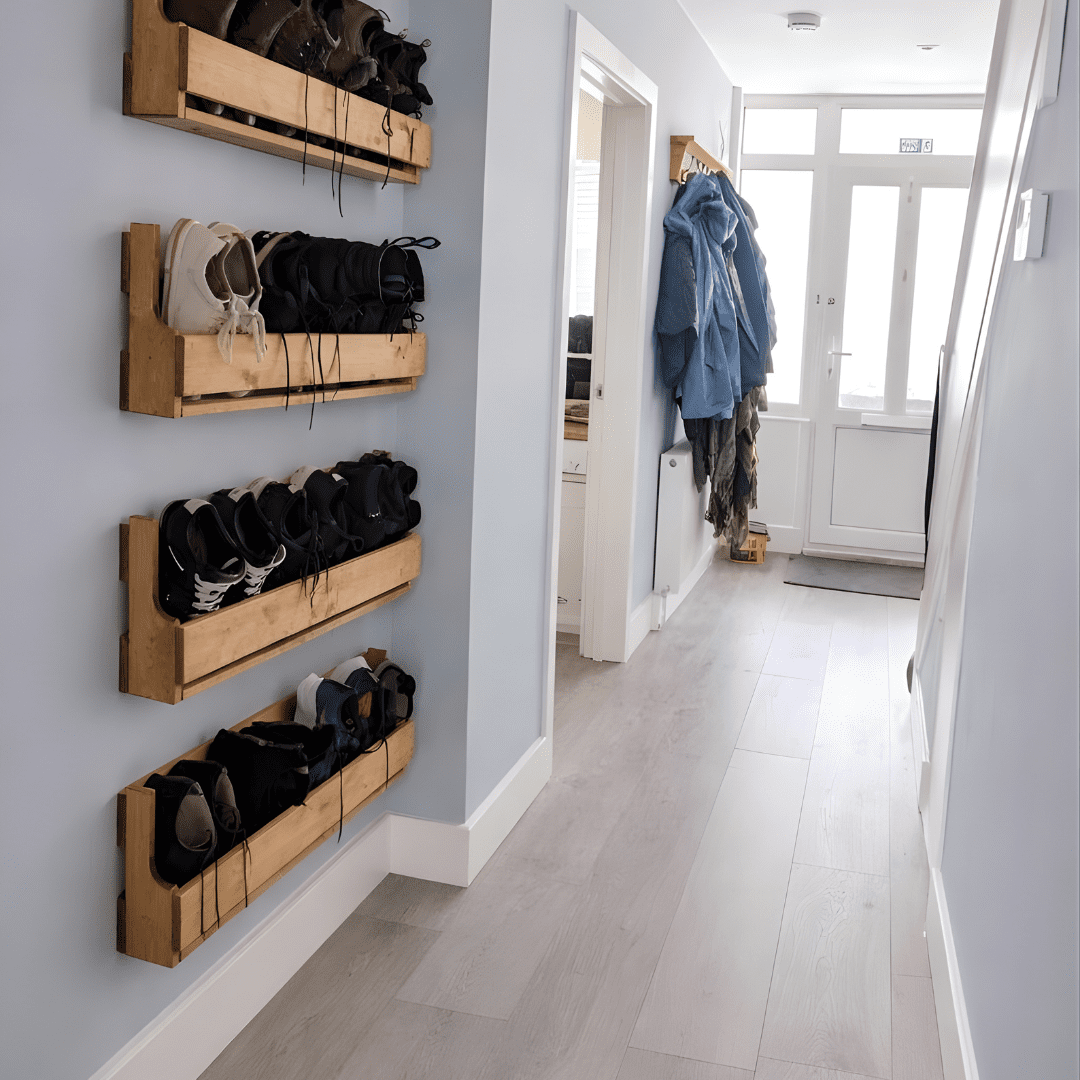
Wooden Shoe Storage Ideas for Your Hallway
Our Home to Yours — Hallway Storage Guide
Wooden Shoe Storage Ideas for Your Hallway
Shoes are one of the most stubborn hallway problems. A pile by the door looks messy, hurts to walk on in bare feet, and tends to spread unless something keeps it in check. Wooden shoe racks are one of the most straightforward solutions — practical, hardwearing, and easy to live with. This guide covers the main options and how to choose the right one for your space.
Why Wooden Shoe Racks Work Well in Hallways
Wooden shoe racks have a few practical advantages over plastic or metal alternatives. They sit heavier on the floor and feel more stable underfoot. They cope well with muddy boots and damp shoes without rusting or warping. And over time, they develop a natural patina that makes them look more settled in the space rather than tired.
The visual case for wood is simpler. In most homes, a wooden shoe rack looks like furniture rather than functional kit. It belongs. Whether your hallway is tiled, carpeted, or wooden-floored, a natural wood rack tends to fit better than one made from a synthetic material.
Reclaimed wood racks, in particular, have a warmth and individuality that plastic shelving cannot replicate. No two are exactly alike, which is part of their appeal.
Types of Wooden Shoe Storage
The right type of wooden shoe storage depends on how many shoes you need to store, how much floor or wall space you have available, and how you want the hallway to look. Here are the main options.
Open-Frame Wooden Shoe Racks
An open-frame rack — two or more tiers of horizontal rails or shelves on which shoes rest — is the most common and practical type. Shoes go on and come off quickly, you can see everything at a glance, and there are no tricky lids or doors to deal with.
The main variation within this category is size: how many tiers, and how wide. A wider, multi-tier rack holds significantly more pairs than a compact model, so this is worth thinking through before you buy rather than after.
Compact Shoe Racks for Small Hallways
For narrow hallways or small entryways where floor space is genuinely limited, a compact rack that holds four to six pairs is often the right answer. It keeps the entrance clear enough to move through comfortably without trying to solve a bigger storage problem than the space will allow.
Compact racks tend to work best when they are treated as a drop zone for shoes in current rotation — the ones being worn most days — rather than long-term shoe storage for the whole household.
Large Shoe Racks for Family Hallways
For households with children, or anyone with a larger shoe collection, a bigger rack makes daily life noticeably easier. A large wooden shoe rack with three or four tiers, wide enough to hold eight or more pairs, means you are not constantly rotating shoes in and out of storage elsewhere in the house.
Width matters here as much as tier count. A rack that is 100cm or more wide can often hold more pairs per tier than a narrow three-tier alternative, while sitting lower to the ground and feeling less imposing in the hallway.
Hallway Bench with Shoe Storage
A bench with shoe storage underneath — either open shelves or a simple lower tier — solves two problems at once. It gives you somewhere to sit while putting on or taking off shoes, and it keeps shoes contained directly below where you are sitting.
This works particularly well in family hallways where children need to sit down to tie laces or pull on boots. The storage below the bench keeps their shoes exactly where they need them, without a separate rack taking up additional floor space.
Wall-Mounted Shoe Storage
For hallways where floor space is critically short, wall-mounted shoe storage removes the footprint problem entirely. Shoes are held in angled pockets or on slanted rails fixed to the wall, keeping the floor completely clear beneath them.
This type of storage requires a bit more effort to use daily — you are lifting shoes onto a wall mount rather than placing them on a floor rack — but in very narrow hallways, the floor space saved is worth the trade-off.
Measure first: Before buying any shoe rack, measure the space you have available. Also measure a typical pair of your most common shoes — adult boots can be 35cm long, which limits how many pairs fit per tier on narrower racks.
How to Choose the Right Size
Getting the size right is the most important decision when choosing a shoe rack. The following table gives a rough guide based on household size.
| Household | Approximate pairs to store | Suggested rack size |
|---|---|---|
| 1–2 people | 6–10 pairs | Compact rack, 2–3 tiers |
| 2–3 people (adults) | 10–16 pairs | Medium rack, 3 tiers |
| Family (2 adults + 2 children) | 16–24 pairs | Large rack, 3–4 tiers, wider width |
| Larger family | 24+ pairs | Two racks, or a wide multi-tier design |
These are rough starting points. Some households have a small number of shoes; others seem to multiply them. The honest approach is to count the pairs currently by your door, add a reasonable buffer, and buy accordingly.
Where to Position Your Shoe Rack
In most hallways, the shoe rack goes beside or below the coat rack — it makes sense to keep shoes and coats in the same place so the routine of arriving home stays simple. Kick your shoes off, hang up your coat, and the hallway stays tidy.
Against the Wall
Placing the rack flat against one wall, in an alcove, or in the corner of a wider hallway uses space efficiently and keeps the central floor area clear. This is the most common approach and works in nearly any hallway.
Under the Stairs
If your hallway has an understairs cupboard or open recess, this is a natural place for shoe storage. The lower section of an understairs space is often the right height for a rack or two, and using it for shoes frees up other storage areas for items that need to be more accessible.
In a Porch or Boot Room
For homes with a porch or separate boot room, keeping shoes there entirely removes them from the main hallway. A large wooden rack in a boot room can be more functional and less concerned with aesthetics — which means it can be sized properly for the household’s actual needs rather than scaled down for appearance.
Combining Shoe Storage with Other Hallway Furniture
A wooden shoe rack on its own solves one problem. Combined with other hallway furniture made from complementary materials, it helps the whole space feel considered rather than assembled.
A coat rack on the wall above or beside the shoe rack, in the same or similar wood tone, ties the practical and the aesthetic together. A small shelf or hook board for keys nearby keeps arrivals and departures smooth. A coir or cotton mat in front of the rack gives shoes a clear place to land.
The goal is not to match everything perfectly — in a hallway, matched furniture can feel too deliberate. It is more about choosing pieces that feel like they belong in the same home. Natural wood, warm tones, and solid construction tend to achieve that without much effort.
One simple rule: Give each person in the household their own section or their own tier on the rack. It sounds obvious, but it makes a meaningful difference to how tidy the hallway stays. When everyone knows where their shoes go, they tend to go there.
Caring for a Wooden Shoe Rack
Wooden shoe racks are low maintenance, but a little regular attention keeps them looking good for longer.
- Wipe down the rack with a dry or slightly damp cloth periodically to remove dust and dirt.
- If shoes come in wet or muddy, let the rack dry naturally before placing wet items back on it. Standing water will eventually damage even hardwood over time.
- A light application of beeswax or natural wood oil once or twice a year feeds the wood and keeps it from drying out. This is particularly useful for reclaimed wood, which tends to be denser but can benefit from occasional conditioning.
- Avoid dragging the rack across hard floors — lift it when moving it to prevent scratching both the floor and the rack’s base.
Hallway Shoe Storage That Actually Gets Used
The test for any hallway storage is whether people actually use it. The most beautifully made shoe rack is useless if the shoes still end up in a pile two steps inside the door.
A few things help. First, placing the rack exactly where people naturally kick their shoes off — not tucked away somewhere inconvenient — dramatically improves the chances of it being used. Second, making the rack the right size for the household means it never fills up and becomes impractical. Third, keeping the system simple means everyone in the household can follow it.
A well-placed, correctly sized wooden shoe rack is one of the small things that makes daily life in a hallway noticeably better. That is really all it needs to be.
Handmade Wooden Shoe Racks — Made in Derbyshire
Browse our range of solid and reclaimed wood shoe racks in compact, medium, and large sizes. Every piece is made by hand in our own workshop.
Summary
Wooden shoe storage works in any hallway — the key is choosing the right size and placing it where it will actually be used. A compact rack suits smaller households and narrow spaces. A large, multi-tier rack suits families or anyone who wants their full shoe collection accessible at the door. A bench with built-in storage suits hallways where sitting down to remove shoes is part of the routine.
Whatever the size, wood is a durable, practical, and visually warm material for hallway shoe storage. It handles daily use well, looks better over time, and sits naturally alongside the other furniture and materials that make a hallway feel welcoming rather than merely functional.




- All Blog Post (30)
- Home Inspiration (9)
- Product Care & Tips (1)
- How to Choose a Rustic Wooden Breakfast Bar for Your Kitchen 11 August 2026
- Personalised Wooden Shoe Rack Ideas: What to Know Before You Buy 6 August 2026
- Wooden Bathroom Shelf with Towel Rail: How to Choose the Right One 4 August 2026
- How to Choose Wooden Caravan Steps for Your Static Caravan or Lodge 30 July 2026
- Wooden Storage Crate Ideas for Every Room in Your Home 28 July 2026