A wooden bathroom shelf with a towel rail is one of those small additions that makes a real difference to how a bathroom feels and functions. It adds storage, keeps towels where you need them, and — if it’s well made — brings a warmth to the room that tiled or chrome alternatives can’t quite replicate.
But like most handmade pieces, there are choices involved before you can find the right one. Size, wood type, rail style, mounting method — each of these affects how the shelf performs and how it sits within your bathroom. This guide covers the key considerations so you can buy with confidence rather than relying on guesswork.
What Is a Wooden Bathroom Shelf with Towel Rail?
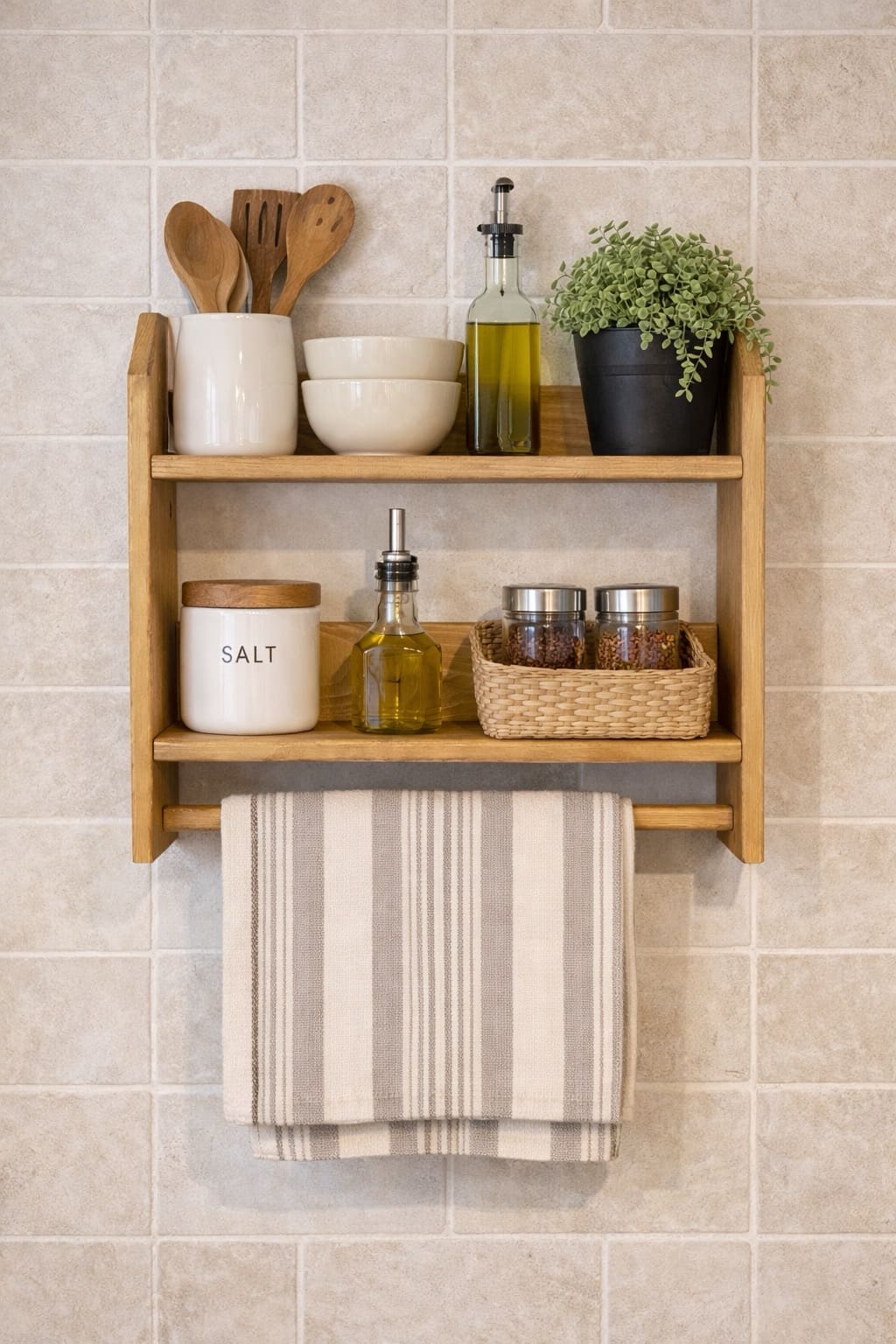
The term covers a range of designs, but the core function is consistent: a wall-mounted wooden shelf with one or more rails or hooks below it for hanging towels. The shelf provides storage space for essentials — toiletries, candles, small plants, folded flannels — while the rail below keeps hand towels or bath towels within easy reach.
Some designs feature a single lower rail. Others have two rails at different heights, or a combination of hooks and a rail. Some include integrated hooks on the sides or underneath the shelf itself. What you choose depends on what you need the shelf to do and how much wall space you’re working with.
Handmade versions from small workshops tend to be more considered in their proportions and construction than mass-produced alternatives. The joints are tighter, the wood is often more characterful, and the overall piece tends to sit more naturally in a room because it hasn’t been designed to the lowest common denominator.

Getting the Size Right
Start with the width. The shelf needs to fit on your chosen wall without crowding adjacent features — switches, extractor fans, windows, or door frames. Measure the available space carefully, including any items already on the wall nearby, before deciding on a width.
As a rough guide, a shelf between 50 cm and 70 cm wide works well in most bathrooms. Narrower shelves — 30 to 45 cm — are useful for smaller walls or en suite bathrooms where space is limited. Wider shelves, 80 cm or more, create a more generous surface but require a larger clear wall area to mount safely.
Depth — the front-to-back measurement of the shelf — should be generous enough to hold what you’ll put on it, but not so deep that it projects excessively from the wall. A depth of 15–20 cm is comfortable for most bathroom essentials. Deeper shelves create more storage but can feel heavy-handed in a smaller room.
The height of the rail or towel bar below the shelf also matters practically. There needs to be enough clearance between the shelf and the rail for a folded towel to hang without touching the wall below. A clearance of 25–30 cm is usually sufficient for a hand towel; 35–40 cm works better if you’re hanging bath towels.
Choosing the Right Wood for a Bathroom
Not all wood is equally suited to bathroom conditions. Bathrooms are humid environments — steam from showers and baths, fluctuating temperature and moisture levels — and the wrong wood will warp, swell, or deteriorate relatively quickly in that environment.
The first thing to look for is whether the wood has been finished with a moisture-resistant treatment. A well-applied oil or wax finish creates a protective barrier that significantly extends the life of a wooden shelf in a bathroom setting. Some makers use Danish oil, others a hard wax oil — both work well when properly applied.
In terms of species, hardwoods tend to perform better than softwoods in humid conditions because they’re denser and less porous. Oak is a popular choice for bathroom shelves precisely because it handles moisture well, is relatively stable, and ages attractively. Pine can work in bathrooms too, but it’s more susceptible to movement if the environment is very humid and the treatment is not kept up.
Reclaimed wood can also work well in bathrooms, particularly if it’s been properly prepared and finished. Reclaimed timber often has a denser, more characterful grain than new wood — the result of slower growth and decades of natural drying. As with any reclaimed piece, the key is making sure it’s structurally sound and finished for the environment it’s going into.
Rail Style — Fixed Bar or Hooks?
The most common design is a simple fixed horizontal bar below the shelf, running the full width or most of it. This is clean, versatile, and easy to use. You can hang towels folded over the bar, or loop a rolled towel through it. It works well in most bathroom styles.
Hooks offer a different approach. Rather than a continuous rail, you have discrete hanging points — typically two, three, or four hooks below the shelf. These are better for hanging individual items securely: a specific towel assigned to each hook, or a combination of towels and robes. The downside is that they’re less flexible than a rail if your needs change.
Some designs combine both: a lower rail for towels and side hooks for additional items. This works well if the bathroom is used by multiple people and storage demands are higher. The trade-off is a slightly more complex-looking piece, which may not suit every interior.
Think practically about how you actually use your bathroom and what you want the shelf to do. A single rail is usually the right starting point. Add hooks if you know you need them.
Mounting Safely in a Bathroom
A wooden shelf needs to be mounted securely, particularly if it will carry the weight of towels in daily use. The key factors are the wall type and the fixing method.
For solid walls — brick, blockwork, or reinforced plaster — screws into wall plugs give a strong, reliable fixing. For stud walls, screwing into the studs is important; fixings into plasterboard alone may not hold sufficient weight over time, especially if towels are pulled from the rail repeatedly.
If you’re mounting on tiled walls, you’ll need a masonry bit and tile drill to get through the tiles cleanly before reaching the wall behind. Go slowly, use a guide at first, and don’t use the hammer setting on the drill through tiles — it will crack them. Once you’re through the tiles and into the masonry, standard fixings apply.
If you’re in any doubt about the wall type or fixing method, asking a joiner or carpenter for a quick assessment is worth the peace of mind. A poorly fixed shelf can work loose over time, which is not only inconvenient but potentially unsafe.
Matching the Shelf to Your Bathroom Style
The shelf should look at home in your bathroom, not like something that arrived from a different room. This is mostly about material tone and finish rather than exact matching.
For bathrooms with a natural, organic feel — white walls, stone tiles, neutral towels — unstained or lightly oiled wood tends to work beautifully. The grain shows clearly, the warmth comes through, and the piece anchors the room without dominating it.
For bathrooms with a darker palette or more industrial look, a darker stained or oiled finish can complement the surroundings. Ebonised oak or a deep walnut-toned finish works particularly well in bathrooms with dark wall tiles or matte black fittings.
If you have other wooden elements in the bathroom already — a wooden bath panel, wooden flooring, or another wooden accessory — aim for a loose tonal match rather than an exact one. Precisely matching wood tones can look over-coordinated and forced. A similar warmth with slight variation looks more natural and intentional.
Maintenance note: Wooden bathroom shelves benefit from an occasional re-oil to keep the moisture protection in good condition. Once a year is usually sufficient in most homes. Wipe the shelf down, allow it to dry fully, and apply a thin coat of the appropriate oil with a cloth. It takes minutes and significantly extends the life of the piece.
Ordering a Custom Wooden Bathroom Shelf with Towel Rail
If standard sizes don’t quite fit your wall or your aesthetic, ordering a custom piece is often the most satisfying route. A small workshop can make a shelf to your exact width, with the rail height you need and the wood finish that suits your bathroom.
When placing an order, useful details to have ready include:
- The width of clear wall space available
- The height you’d like the shelf to sit at
- Preferred depth of the shelf surface
- Your preference on rail versus hooks, or both
- Wood type or finish preference
- Whether the bathroom is particularly steamy or humid, so the maker can advise on the best finish for your conditions
A handmade wooden bathroom shelf with towel rail is one of those pieces that rewards careful choosing. It will be on your bathroom wall for years, used daily, and seen by every guest who visits. Getting the size, wood, and finish right from the start means you end up with something you’re genuinely pleased with rather than something you learn to live with.
Handmade wooden bathroom shelves with towel rails
Our Home to Yours makes wall shelves with integrated towel rails by hand in Derbyshire. Available in kitchen and bathroom versions, each is built to a solid standard with a warm, practical feel. View our wooden bathroom shelf with towel rail or get in touch to discuss a custom size or finish.